
AI-Driven and Privacy-First: How Snowflake Powers Modern Marketing

AI-Driven and Privacy-First: How Snowflake Powers Modern Marketing

Written by

Jacob Zweig, Managing Director

Published

May 7, 2025
AI & Machine Learning
AI-Driven Marketing
Snowflake

The rules of marketing are changing fast. AI is raising the bar for personalization. Privacy regulations are reshaping how you work with customer data. And siloed data stacks? They’re quickly becoming a thing of the past. That’s why OneSix partners with Snowflake — to help marketing teams not only keep pace, but lead.

We bring together AI, machine learning, and Snowflake’s AI Data Cloud to help companies build smarter, faster, and more personalized marketing strategies rooted in trusted, connected data. Together, we give you the tools to act on insights, optimize spend, and elevate performance — all while protecting customer privacy and scaling with confidence.

5 Trends Reshaping Marketing

Snowflake’s Modern Marketing Data Stack 2025 report highlights five major forces reshaping the landscape. But to succeed, companies need more than ideas — they need a foundation built for agility, intelligence, and security. That’s where Snowflake shines — and where OneSix delivers real business value.

Trend 1

The Rise of the Data-Empowered Marketer

In 2025, marketers are no longer waiting on technical teams to access insights. Thanks to advancements in AI and natural language querying, they can now explore data directly, make decisions faster, and create more personalized experiences​.

At OneSix, we help marketing teams take full advantage of this shift with personalization at scale, deploying models like Lifetime Value (LTV), churn prediction, and Next Best Action to deliver immediate, actionable insights that drive real-time personalization.

Trend 2

Sophisticated, Data-Connected Applications

Marketing applications are evolving to connect directly to unified data platforms rather than relying on fragmented, siloed subsets. This new model boosts security, strengthens governance, and unlocks deeper insights across every customer interaction​.

OneSix designs marketing ecosystems where applications work seamlessly with unified customer data, creating the foundation for truly cohesive, omnichannel engagement.

Trend 3

Old and New Measurement Strategies

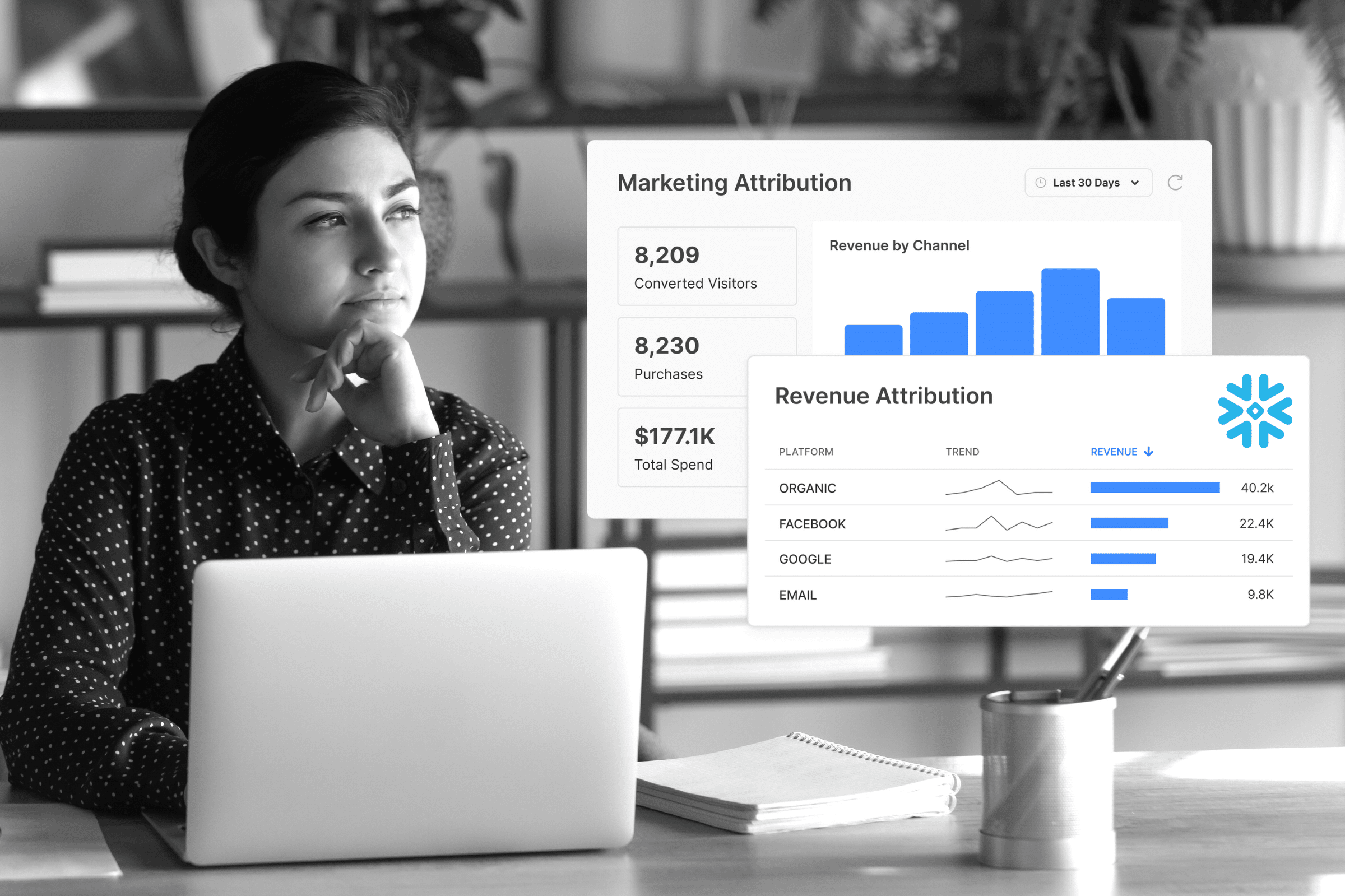
As third-party cookies become less reliable, marketers are turning to a blend of classic and modern measurement tools, including Marketing Mix Modeling (MMM) and secure Data Clean Rooms​. These approaches offer a privacy-first way to measure performance and optimize budget allocation.

Through our Marketing ROI Measurement services, OneSix helps companies implement next-generation MMM models and privacy-centric attribution frameworks to deliver actionable clarity on campaign effectiveness.

Trend 4

The Increased Value of First-Party Data

In a privacy-first world, first-party data has become marketing’s most valuable asset. Brands that successfully capture, enrich, and activate their own customer data are gaining undeniable competitive advantages​.

At OneSix, we empower organizations to build rich, scalable first-party data ecosystems—leveraging clustering, segmentation, and predictive modeling to unlock smarter acquisition, retention, and personalization strategies.

Trend 5

The Rise of Commerce Media

More brands are transforming into media platforms themselves, monetizing their first-party data by creating targeted advertising ecosystems. Whether in retail, travel, telecom, or beyond, this shift to commerce media opens new revenue streams and deepens customer engagement​.

OneSix supports brands in navigating this opportunity with our high-value audience acquisition solutions, helping companies not only identify and convert high-value customers but also build monetizable audience strategies through predictive insights and lookalike modeling.

Snowflake Icon (2)

Snowflake: The Core of Modern Marketing

To fully take advantage of these emerging marketing trends, companies need more than ambition — they need the right foundation. As Snowflake highlights, building a future-ready marketing stack means embracing platforms that are connected, composable, and AI-powered​.

At the heart of this transformation are key capabilities and technologies that define the modern marketing data stack:

Unified, AI-Ready Data Platform

Snowflake's AI Data Cloud eliminates data silos by centralizing customer, campaign, and sales data in a single, governed environment. This "single source of truth" unlocks faster personalization, smarter segmentation, and more efficient optimizations.

Advanced AI and ML Services

With Snowflake Cortex, marketers can easily tap into pre-built machine learning models and generative AI capabilities for tasks like customer segmentation, predictive scoring, and automated personalization — without needing deep technical expertise.

Privacy-First Collaboration

Snowflake's Data Clean Rooms enable secure data collaboration with partners and media platforms, allowing companies to measure campaign performance and enrich audience insights while fully preserving user privacy.

Third-Party Enrichment

Through the Snowflake Marketplace, marketers can access hundreds of third-party data sources — from demographic and intent data to purchase behavior — enriching their own first-party data without complex integrations.

Identity Resolution and Enrichment

Marketers can tie together fragmented user profiles and anonymous interactions using Snowflake-native identity resolution tools, making it easier to create a truly holistic view of the customer journey.

Governance and Security Built In

Snowflake ensures data security, governance, and compliance at every layer, helping marketing teams maintain customer trust while deploying increasingly sophisticated personalization strategies.

At OneSix, we help companies not just implement these Snowflake capabilities — but also design strategies around them. We build AI-driven marketing ecosystems that are fueled by unified data, automated by intelligent models, and powered by real-time insights — so you can deliver the right message, to the right customer, at exactly the right time.

Whether you’re ready to deploy Snowflake Cortex for predictive engagement, leverage Data Clean Rooms for collaborative attribution, or enrich your segmentation strategies through Snowflake Marketplace, OneSix can accelerate your path to marketing success.

Future-Proof Your
Marketing Strategy

At OneSix, we don’t just implement Snowflake — we create custom, AI-powered marketing strategies built on it. From real-time personalization to privacy-first measurement, we’re here to help you lead with data, act with intelligence, and scale with confidence. Let’s reimagine your marketing strategy together.

Contact Us

Marketing Spend Optimization: Why AI Is the Key to Higher ROI

Marketing Spend Optimization: Why AI Is the Key to Higher ROI

Written by

Jacob Zweig, Managing Director

Published

April 16, 2025

AI & Machine Learning
AI-Driven Marketing

With marketing efforts spread across countless channels, each dollar spent—and each customer touchpoint—has greater impact and complexity.

Unfortunately, many brands still rely on outdated marketing models: last-click attribution, rigid budget plans, and disconnected reporting systems. These traditional approaches can’t capture the full story, leading to missed opportunities and wasted spend.

It’s time to move beyond guesswork. With the rise of AI-powered tools like Multi-Touch Attribution (MTA) and Media Mix Modeling (MMM), brands can now track the complete customer journey, attribute value across every channel, and continuously optimize their marketing strategy in real time.

In this post, we’ll explore how AI is reshaping marketing strategy—from smarter budget allocation to advanced attribution models—and how OneSix can help you turn insights into impact.

200%

Increase in return on ad spend (ROAS)

15%

Increase in sales

Why Traditional Marketing Strategies Fall Short

Many marketing teams still rely on legacy models—last-click attribution, manual reporting, and siloed channel analysis. These outdated methods make it nearly impossible to understand the full customer journey or justify budget allocation decisions.

In a world where customers interact with brands across multiple devices, platforms, and stages of decision-making, traditional marketing approaches simply can’t keep up.

AI-Driven Budget Allocation Optimization

AI models can analyze historical performance, campaign goals, and channel effectiveness to recommend how to allocate your marketing budget across platforms like Google Ads, social media, email, and display. Instead of relying on static budgets set months in advance, AI enables dynamic, responsive decision-making—so you’re always investing where it counts.

Multi-Touch Attribution (MTA)

See the full picture of the customer journey.

Understanding the effectiveness of your marketing efforts is no small feat—especially when customer journeys span a wide array of online and offline channels. That’s where Multi-Touch Attribution (MTA) comes in.

MTA is a powerful framework that helps marketers understand how different touchpoints—like social media ads, search campaigns, email marketing, and website visits—contribute to a customer’s decision to buy or engage. Unlike basic models that assign all the credit to the first or last interaction, MTA assigns value to multiple touchpoints across the journey, providing a more accurate, data-informed view of marketing performance.

Traditional Attribution Models: A Limited View

Before diving into advanced techniques, it’s helpful to understand where many marketers start:

While easy to implement, these models often produce incomplete or misleading insights, especially when trying to optimize spend across diverse marketing channels.

Modern MTA Models: Deep Learning for Deeper Insight

As marketing channels become more complex and customer journeys more fragmented, modern AI-driven models are filling the gap. Advanced MTA approaches—like LSTM networks, Transformers, and Temporal Convolutional Networks (TCNs)—can model sequential customer behavior, learn from historical data, and accurately assign value to each touchpoint.

LSTM-Based Attribution

Long Short-Term Memory (LSTM) networks are a type of recurrent neural network (RNN) ideal for analyzing sequences. They can process long customer journeys, understand the timing and order of interactions, and identify which touchpoints had the greatest influence on a conversion. By calculating gradients (i.e., how much a small change in one touchpoint affects the outcome), LSTM models can attribute precise credit to each step along the way.

Transformer-Based Attribution

Transformers—famous for powering models like ChatGPT—excel at understanding relationships between touchpoints, regardless of distance in the sequence. Their self-attention mechanism lets the model weigh how every touchpoint relates to every other, enabling highly nuanced attribution. This approach is ideal for complex customer journeys with many simultaneous interactions across channels.

Temporal Convolutional Networks (TCNs)

TCNs are another powerful option for modeling time-ordered data. Unlike RNNs, they use dilated convolutions to analyze sequences in parallel, which leads to faster processing and high accuracy. TCNs work especially well when journey lengths vary from customer to customer.

Applications of MTA: From Insight to Action

So how do these models translate into better business outcomes?

Smarter Budget Allocation

MTA helps marketers identify true ROI across channels and adjust budgets accordingly. For instance, if social media drives early engagement but email converts, you can confidently invest in both.

Customer Journey Optimization

MTA reveals the actual sequence of touchpoints that lead to bookings or purchases. This insight helps refine not just messaging and creative, but also the order, timing, and targeting of campaigns.

Hyper-Personalization

With granular attribution data, you can tailor marketing strategies to specific segments—delivering more relevant offers across the right channels.

From Attribution to Action: Budget Optimization in Practice

Once an MTA model is trained, it produces attribution weights that quantify each touchpoint’s influence on conversions. These weights can be used to solve a mathematical optimization problem: how to distribute your marketing budget across channels to maximize conversions or revenue.

For example, if your MTA model outputs these weights:

You can use optimization techniques (e.g., linear programming or gradient descent) to allocate your budget in a way that maximizes return, while also considering constraints like minimum spend thresholds or strategic goals.

OneSix helps brands take these results and apply them in the real world—building automated budget optimization systems that adjust spend in real time based on performance data and predictive insights.

Media Mix Modeling (MMM)

Optimize every marketing dollar you spend.

In today’s privacy-conscious environment, Media Mix Modeling (MMM) is gaining traction as a powerful, cookie-free approach to understanding marketing impact.

MMM uses aggregated historical data to quantify how different marketing activities—like TV, paid search, influencer campaigns, or email—affect outcomes like revenue, conversions, or customer lifetime value. It’s especially valuable when dealing with long buying cycles, offline conversions, or regional campaign variations.

Why Brands Are Turning to MMM

As marketing strategies grow more complex, so does the challenge of proving ROI. MMM addresses this by offering:

Improved ROI Visibility

MMM pinpoints which marketing efforts actually drive results, helping you spend smarter across channels.

Increased Accountability

With clear metrics on effectiveness, you can confidently justify your budget decisions to leadership.

Real-Time Optimization

With modern tooling and infrastructure, MMM isn’t just a once-a-year exercise—it can be run regularly to adapt to market changes.

Multi-Touch Influence

MMM can capture the cumulative impact of various touchpoints—even those traditionally difficult to measure, like print media or influencer impressions.

Privacy Resilience

Unlike methods that rely on user-level tracking or cookies, MMM uses aggregate data, making it a future-proof strategy in a privacy-first world.

Reduced Bias in Decision-Making

Advanced MMM models automate decisions around ad fatigue, seasonality, and spend thresholds, removing guesswork and gut-feeling from critical marketing calls.

How MMM Works: The Mechanics Behind the Model

MMM builds a statistical model that connects marketing activities and external factors to your key business outcomes. Here are two of the most important concepts:

Adstocking

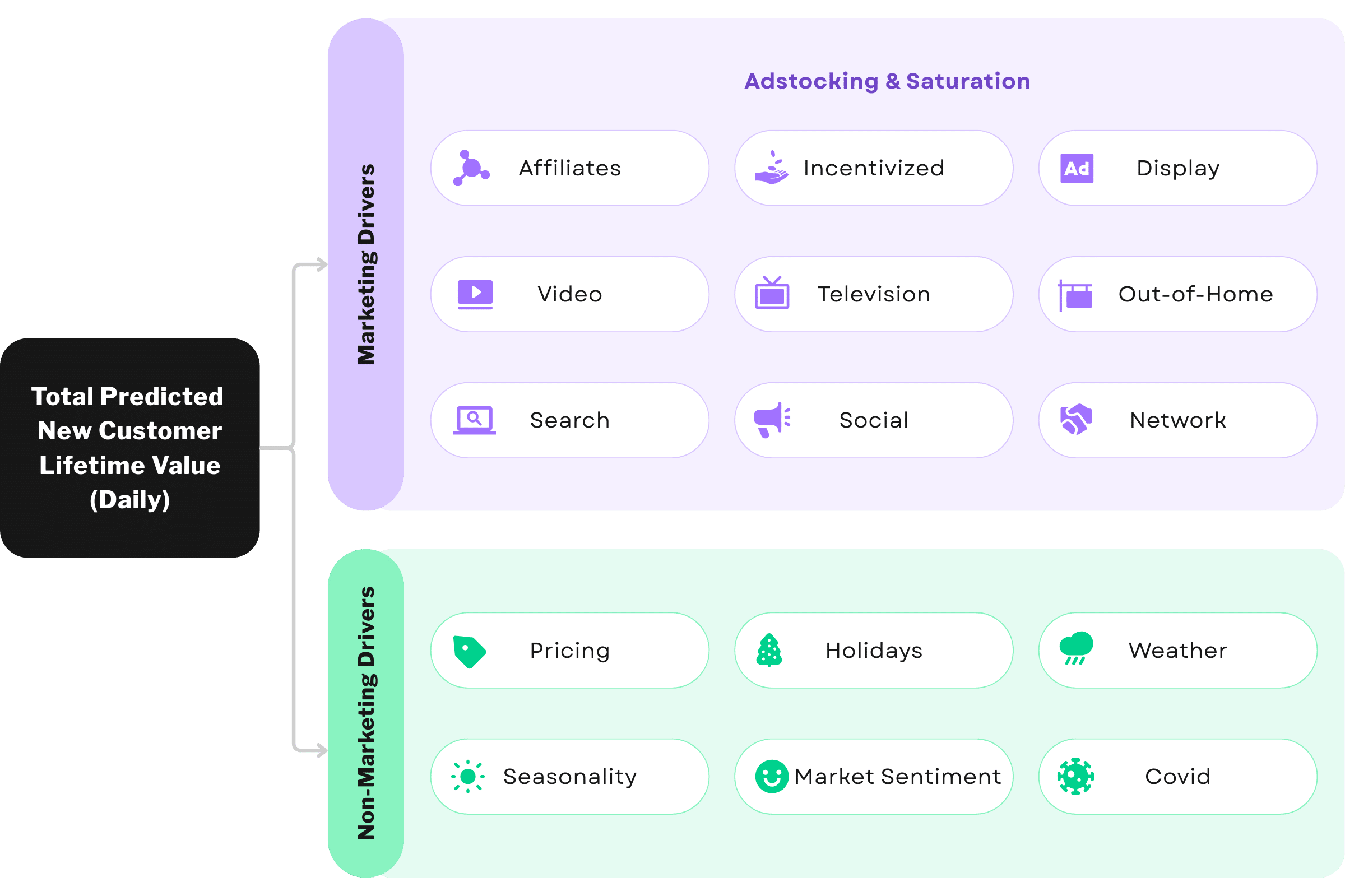
Not all marketing effects are instant. Adstocking accounts for the delayed impact of a campaign—for example, the lingering effect of a billboard or a TV commercial. This allows the model to recognize how impressions continue to influence behavior days or weeks after the initial exposure.

Saturation

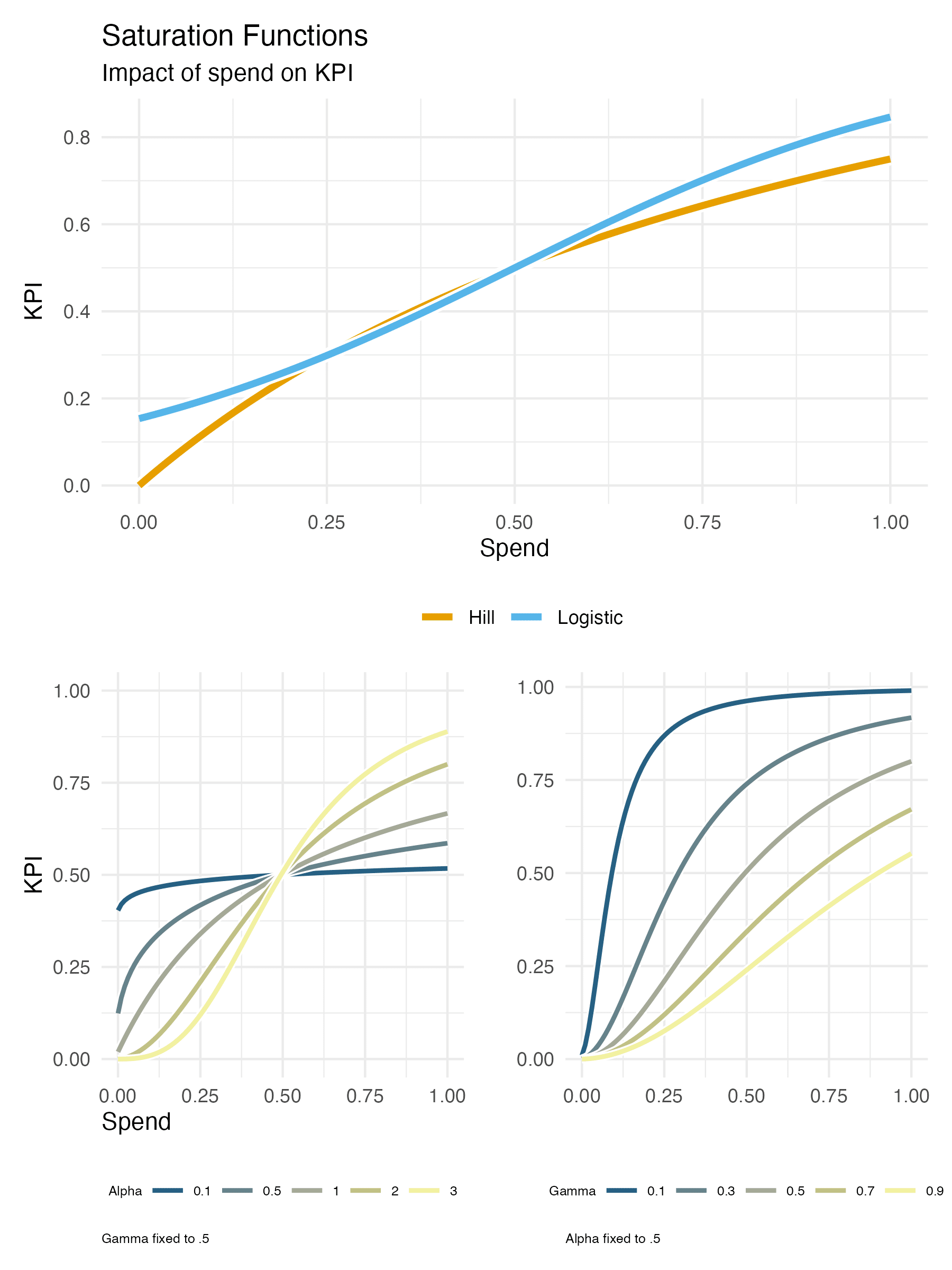
Every channel has a point of diminishing returns. MMM models use saturation curves (often modeled with a Hill function) to understand when added spend in a channel stops yielding proportional returns. This is crucial when planning budgets across multiple media types with vastly different spend efficiency curves.

MMM also adjusts for external factors like pricing, market conditions, and seasonality—ensuring you isolate marketing’s true impact.

Off-the-Shelf vs. Bespoke MMM: Choosing the Right Fit

There are a number of tools available to implement MMM—each with its strengths and trade-offs.

Off-the-Shelf Tools
Custom/Bespoke MMM Solutions

For brands with unique needs—such as regional campaign structures, legacy data systems, or complex business rules—a custom MMM model may be the best route. These models offer:

OneSix partners with clients to design and implement bespoke MMM solutions, from initial data exploration through production-ready deployment—ensuring that the model aligns tightly with your business goals and marketing operations.

From Modeling to Optimization: Turning Insights into Action

Once an MMM model is built, it generates a set of channel-level performance metrics—like marginal ROI and efficiency curves. These metrics feed directly into budget optimization models, helping you decide how much to spend on each channel to maximize ROI, given your total budget and business constraints.

Example:

Using these inputs, OneSix can help you solve for the optimal budget allocation using methods like linear programming or Bayesian optimization—automating the process of getting the most out of your spend.

Move Beyond Guesswork. Start Optimizing with AI.

Modern marketing requires more than clever creative—it demands clarity, precision, and adaptability. AI-powered solutions like MTA and MMM help brands cut through complexity and optimize every dollar. At OneSix, we build advanced marketing analytics frameworks that drive visibility, efficiency, and smarter decisions. Ready to make your marketing work smarter? Let’s talk about how to elevate your strategy and optimize your spend.

Contact Us

Right Message, Right Time: How AI is Transforming Modern Marketing

Right Message, Right Time: How AI is Transforming Modern Marketing

Written by

Jacob Zweig, Managing Director

Published

April 1, 2025

AI & Machine Learning
AI-Driven Marketing

Today’s customers don’t just want personalized experiences—they expect them. Whether shopping online, engaging with content, or exploring new services, people are looking for brands that understand their needs and speak to them on an individual level.

The problem? Traditional batch-and-blast marketing simply doesn’t cut it anymore. Generic messages sent to broad audiences risk being ignored—or worse, driving customers away.

To stay competitive, brands must move beyond one-size-fits-all campaigns and embrace AI-driven personalization. By harnessing the power of first-party and third-party data, businesses can gain deeper insight into customer behavior and deliver targeted, real-time messaging that increases engagement, drives loyalty, and boosts long-term value.

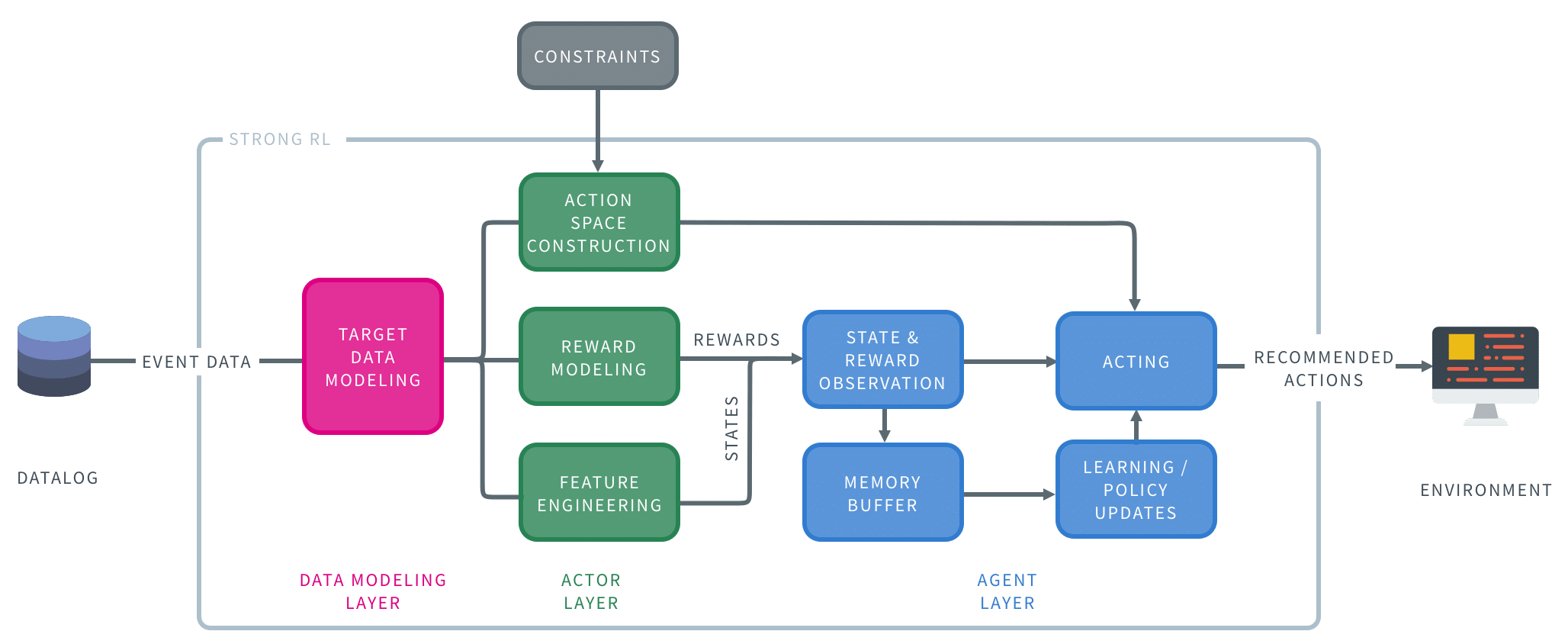
At OneSix, we help companies put data to work—building smarter, adaptive marketing strategies that deliver the right message to the right customer at exactly the right time. By integrating AI into their marketing strategies, our clients are unlocking measurable, data-backed results:

10%

Increase in customer visits

6%

Increase in profitability

15%

Increase in sales

Fueling Personalization with First- & Third-Party Data

Data is more than just a business asset—it’s the foundation for delivering relevant, high-impact customer experiences. By combining first-party and third-party data, brands can unlock deeper insights, close data gaps, and build smarter, more personalized marketing strategies.

Higher-Quality Insights for Better Customer Profiles

First-party data—collected directly from customer interactions across websites, apps, and transactions—offers high-quality, trustworthy insights into individual behaviors, preferences, and purchase history. This rich data allows brands to build detailed customer profiles and target specific segments with precision.

When paired with third-party data, which provides broader market context and behavioral trends, these profiles become even more robust. The result is a more complete view of each customer and better-informed marketing decisions.

Enhanced Experiences and Differentiated Value

First-party data helps identify customer needs, pain points, and preferences in real time—allowing brands to deliver timely, relevant offers and personalized recommendations. This not only improves the customer experience but also builds long-term loyalty.

Third-party insights enhance this by offering visibility into external factors—like competitive activity, seasonal trends, or consumer behaviors across other platforms—enabling brands to refine their value propositions and stand out in a crowded market.

Smarter Targeting and Hyper-Personalization

A combined data approach allows brands to fine-tune their targeting strategies. First-party data provides individual-level detail, while third-party data offers a broader lens into market behavior.

Together, they enable hyper-personalized campaigns—whether it’s tailoring product recommendations, suggesting relevant content in real time, or customizing messages for specific audience segments across digital channels.

Predictive Analytics That Drive Growth

While first-party data offers a historical lens into customer behavior, third-party data adds predictive power when fed into AI models. This combination supports:

By leveraging both datasets through AI, brands can make smarter, faster decisions that anticipate customer needs and drive revenue growth.

Smarter Engagement Through AI

AI is fundamentally changing how brands understand, target, and engage with their audiences. From acquiring new customers to deepening relationships with loyal ones, AI-driven models enable personalized, data-informed strategies that deliver measurable results across the customer journey.

Customer Segmentation Modeling

Segmentation powered by AI goes far beyond traditional demographic-based grouping. For unknown or prospective users, techniques such as clustering and lookalike modeling allow brands to generalize insights from known customer behaviors to broader audiences across digital platforms. These models help define high-value segments and guide user acquisition strategies.

For known users, AI enables dynamic segmentation based on up-to-the-moment behavioral data, allowing for hyper-targeted messaging that evolves as the customer does.

Real-World Example

A retail brand may use lookalike modeling to identify new prospects who mirror the behavior and preferences of their most valuable customers, tailoring digital advertising to attract high-intent buyers.

Customer Propensity Modeling

Propensity models leverage a wide range of data—including behavioral, contextual, and third-party inputs—to predict the likelihood of specific customer actions. These models help marketers identify which customers are most likely to purchase, upgrade, convert, or churn, allowing for more effective targeting and optimized marketing spend.

With AI, marketers can prioritize offers, customize messaging, and allocate resources based on real-time intent rather than static assumptions.

Real-World Example

A SaaS company could use propensity scoring to identify which website visitors are most likely to sign up, and immediately serve personalized trial offers through digital ads or email campaigns.

Real-Time Personalization

When engaging with known customers, AI plays a critical role in determining what to do next. By combining models such as Lifetime Value (LTV), churn prediction, and next-best-action optimization, brands can understand likely customer behavior and tailor marketing strategies accordingly.

Next Best Action (NBA) models go beyond traditional rule-based decision systems by dynamically adapting to real-time data and customer context. Rather than relying on static flows or pre-defined triggers, AI-driven NBA strategies evaluate a wide range of inputs—behavioral signals, preferences, environmental context—to surface the most relevant message, offer, or action at any given moment.

These models continuously learn from customer interactions across digital and physical touchpoints, enabling real-time personalization at scale. Whether it’s identifying the best time to send a message, recommending the right offer, or selecting the most effective channel, AI helps ensure each interaction is relevant, timely, and impactful.

Real-World Example

A leading casino implemented a real-time marketing engine, built on Next Best Action modeling, to personalize offers based on both in-casino activity and online behavior. The result was increased engagement, a 10% increase in player visits, and a 6% boost in player profitability. Explore the full case study →

The Future of Marketing Is Personalized

AI is no longer a nice-to-have—it’s a competitive necessity. In a marketplace where timing, relevance, and experience are everything, AI-driven personalization empowers brands to meet customers where they are with messaging that resonates.

From smarter segmentation and predictive targeting to real-time personalization and next-best-action optimization, AI enables marketing strategies that are more adaptive, impactful, and customer-centric.

Get Started

Ready to move beyond generic campaigns? OneSix helps companies turn data into meaningful customer experiences that drive loyalty and long-term value. Get in touch with us for a consultation.

Contact Us